Seasickness on a Komodo boat trip is a real risk, not a hypothetical — and the counterintuitive part is this: the fast speedboat that reaches Padar Island in about an hour can hit harder than the lumbering wooden boat that takes four. Which vessel class, which crossing, and which month you travel determine how your stomach holds up. This guide lays that out plainly, without dramatics.
The Flores Sea is exposed open water. Between Labuan Bajo and the outer islands — Padar sits roughly 45 to 50 kilometres out, Komodo Island’s Loh Liang landing around 60 to 65 kilometres — there is no island shelter once you clear the inner harbour. Wind-driven swell rolls freely across these crossings. That is not a reason to stay home; it is context for the decisions below.
Season First: When the Flores Sea Is Roughest
The Flores Sea follows a well-established seasonal pattern rooted in regional monsoon climatology. Knowing the windows helps you decide both when to travel and which boat class to prioritise.
December to February: the roughest window
The northwest monsoon drives consistent swell and short-period chop across this stretch of the Indonesian archipelago. Operator cancellations happen in this window. The harbour master (syahbandar) in Labuan Bajo has the authority to close the port to small craft when conditions exceed safe limits — this mechanism gets exercised. Speedboat departures are most frequently postponed or cancelled from December through February, and when they do run, the crossing to Padar or Komodo can involve genuine rolling and slamming. Passengers prone to motion sickness should plan conservatively for this period: either book a heavier vessel, load up on medication, or shift the trip to a calmer month.
March: transitional, unpredictable
Swell can linger into early March as the monsoon retreats. Conditions typically improve as the month progresses but cannot be guaranteed. This is a planning-risk month — it may be fine, it may not be.
April to June: first sweet spot
The dry season establishes itself, swell subsides, and underwater visibility clears. April and May are low-season shoulder months — fewer tourists, competitive prices, calm crossings. June opens peak tourist season (June through August) and sea conditions remain generally good in the early part of the month, though afternoon trade winds can build by late June and July.
July to August: peak crowds, mostly calm mornings
The most popular travel window. Seas are predominantly flat in the morning, which is exactly why departures at 06:00–07:00 are standard — operators are not just chasing Padar sunrise; they are getting you across before afternoon wind builds. If your trip runs long or departs late, expect choppier return crossings in July and August. Also note: 2026 brings a park-wide visitor cap of 1,000 visitors per day (reportedly in force from approximately April 2026 — verify before you travel, as this is a new and evolving regulation). Book your boat and park tickets well in advance during peak season.
September to November: second sweet spot
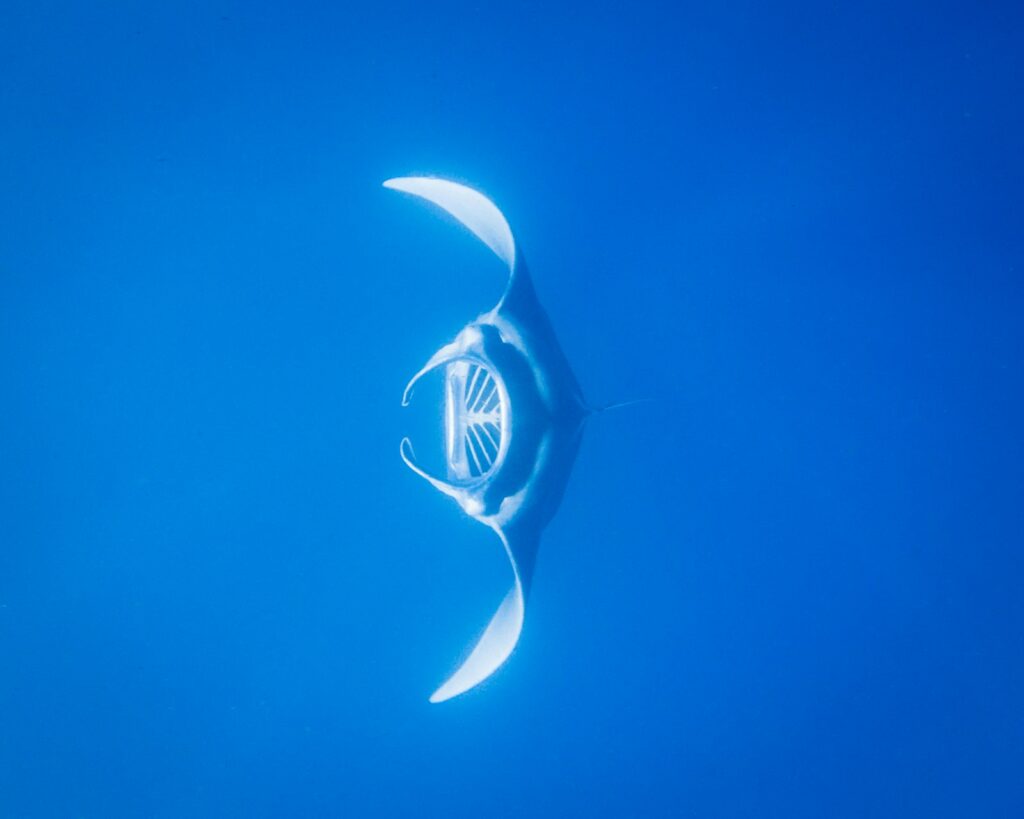
Post-peak season, stable seas, fewer crowds. Plankton load rises through October, which brings better manta aggregations to Karang Makassar (Manta Point). October is broadly the favourite month among experienced operators for combining calm crossings, manageable crowds, and good marine life sightings.
| Month(s) | Sea State Pattern | Seasickness Risk | Notes |
|---|---|---|---|
| Dec–Feb | Rough — northwest monsoon swell and chop | High | Cancellations possible; take meds regardless of boat type |
| March | Transitional, variable | Moderate–High | Unpredictable; check conditions close to travel date |
| Apr–Jun | Calm — dry season establishes | Low–Moderate | Best shoulder value; Jun peak crowds begin |
| Jul–Aug | Mostly calm mornings; afternoon wind chop possible | Low (morning), Moderate (afternoon return) | Peak season; book early; 1,000/day cap applies (last verified 2026) |
| Sep–Nov | Calm and stable | Low | Second sweet spot; Oct widely regarded as best month overall |
Fast Boat vs Wooden Boat: Why They Feel Different on Your Stomach
This is the point that most travel content skips over. People assume the speedboat is smoother because it gets you there quickly. In rough or choppy conditions, it is not.
The speedboat: high-intensity, short duration
A fibreglass or GRP speedboat — typically 20 to 40 seats, twin outboards or inboards — skips across the surface at speed. In calm conditions this is fine. In chop, the hull slaps hard against short-period waves; you feel each impact directly through the hull and your seat. High speed plus short-wave period equals pounding. The bow seats are worst for this. The rear-centre section is the motion-smoothest position on the boat because the stern moves with lower amplitude as the hull pivots around roughly its centre of mass.
The speedboat crossing from Labuan Bajo to Padar takes approximately one hour. To Komodo’s Loh Liang, roughly another 20 minutes from Padar. The intensity is high but the exposure is short — which is better for people whose seasickness builds cumulatively over time.
The wooden slow boat: low-intensity, long duration
A traditional wooden kapal kayu cruises at 6 to 8 knots. It sits deeper in the water on a longer, heavier hull. It rolls through swell rather than slamming over it — the motion on each individual wave is gentler. But the same crossing that takes a speedboat one hour takes a wooden boat three to four and a half hours.
Three or four hours of sustained gentle rolling, combined with diesel fumes drifting back from the engine room, can cause seasickness in people who handle the speedboat’s short sharp ride without problems. The longer the vestibular mismatch continues, the higher the cumulative risk for susceptible individuals. There is also the practical point that a slow-boat day trip realistically reaches two to three stops rather than the six-stop route that a speedboat covers — the slow boat is not just slower, it physically cannot complete the full route in daylight hours.
The phinisi day cruise: most stable, different price tier
A phinisi — a traditional larger Indonesian wooden sailing vessel, often 20 to 30 metres, with a deeper keel and considerably more mass — has the most stable motion of the three types in most sea conditions. The pitch and roll are dampened by hull mass. If seasickness is a serious concern and budget is flexible, a phinisi day cruise is the most comfortable option on the water.
The trade-off: shared phinisi day cruises typically run IDR 2 to 5 million per person; private day charters start at IDR 25 million upward. That is a very different price bracket from a shared speedboat at IDR 1.2 to 1.8 million per person. The phinisi also moves slowly and covers fewer stops per day.
- Shared speedboat (standard 6-stop day trip)
- Crossing time to Padar: ~1 hour. Motion profile: high-impact slamming in chop, smooth in calm. Seasickness risk: high when seas are rough, manageable in calm season. Price range: IDR 1,200,000–1,800,000/person (park fees excluded, paid cash on the day).
- Slow/budget wooden boat (2–3 stops)
- Crossing time to Padar: ~3–4.5 hours. Motion profile: sustained low-amplitude rolling. Seasickness risk: moderate to high over long exposure, worsened by diesel fumes. Price range: IDR 500,000–1,200,000/person. Cannot complete the full 6-stop route in one day.
- Phinisi day cruise (shared)
- Motion profile: most stable due to hull mass and keel depth. Seasickness risk: lowest of the three types. Price range: IDR 2,000,000–5,000,000/person shared; private charters IDR 25,000,000+. Slower pace, fewer stops.
Planning your boat type alongside your departure month? Our planning team can match you to the right vessel and season — or reach us via WhatsApp to talk through options before you book.
The Protocol That Actually Works
Seasickness is a vestibular problem. The inner ear registers motion; the eyes see a stationary cabin wall or phone screen; the brain resolves the mismatch through nausea. The pharmacology is well established and the basics have not changed in decades.
Medication: timing matters more than product
Antihistamine-based antiemetics (dimenhydrinate — sold as Dramamine and generic equivalents widely available in Labuan Bajo pharmacies) and anticholinergics (scopolamine transdermal patches) suppress the vestibular response. Both require time to reach therapeutic blood levels before the motion starts.
The two-hour rule is not operator superstition. Take medication two hours before departure, not at the dock when you already feel queasy. Most shared speedboat tours depart at 06:00–07:00 from Labuan Bajo marina. That means taking medication at 04:00–05:00 — inconvenient, but necessary. Set an alarm the night before.
Dimenhydrinate works for most people and is inexpensive. Meclizine (Bonine) causes less drowsiness than standard dimenhydrinate. Scopolamine patches (by prescription in many countries; apply behind the ear) are the most effective option for full-day crossings — apply at least four hours before departure, ideally the night before. Ginger supplements or candied ginger have modest clinical evidence and no side effects; a sensible addition regardless of what else you take.
One thing that does not work: anything taken once you are already nauseous. Timing is the intervention.
Position on the boat
Rear-centre on the speedboat. The bow receives the most impact from wave slamming; the far stern pitches in the opposite direction; the rear-centre section experiences the least motion. Book or claim that seat early — if you are prone to seasickness, mention it when you board.
On a wooden boat, stay on deck. Below-deck removes your visual horizon reference — the one thing that partially compensates for vestibular signals — and concentrates engine fumes. Amidships on deck is best.
On a phinisi, the open sundeck positions are ideal: open air, forward visibility, no engine proximity.
Eyes and diet
Look at the horizon, not the other passengers. Not your phone. Not the camera screen. Fixing your gaze on a stationary nearby object while the vestibular system signals motion is one of the fastest ways to trigger nausea. The horizon provides a stable visual reference that partially counteracts the conflicting inner-ear signal. This is not a metaphor — it is how the brain recalibrates its conflicting inputs.
Eat lightly before departure, not nothing. An empty stomach does not prevent seasickness and in some people worsens nausea. A small neutral meal — rice, bread, plain crackers — two to three hours before departure is better than skipping food. Avoid alcohol the night before (dehydration compounds motion sickness). Avoid greasy or heavy food on departure morning. Strong coffee on an empty stomach at 05:00 is a common mistake.
Drink water through the crossing. Dehydration is a multiplier.
Fresh air and early action
Carbon dioxide buildup in enclosed boat cabins, combined with engine fumes, genuinely worsens nausea. If you start to feel unwell, get to the open deck immediately and face forward. Do not wait to see if it passes while staring at a cabin wall.
If vomiting becomes likely, get to the side rail in the fresh air before it is urgent. Crew on Komodo day trips are experienced with this — it happens regularly, it is not unusual, and they will not judge you. Over the side, downwind.
Acupressure wristbands (Sea-Bands and equivalents) have mixed clinical evidence but carry zero risk. Some people find them genuinely effective; others notice no difference. If you are prone to seasickness, they cost little and weigh nothing — bring a pair.
Quick Reference: Pre-Departure Checklist
- Book the calmer season if you have flexibility (Apr–Jun or Sep–Nov)
- For rough months (Dec–Feb), choose a phinisi or wooden boat over speedboat if completing all stops is not the priority
- Take medication at least 2 hours before departure — set an alarm the night before
- Eat a light neutral breakfast 2–3 hours before, not nothing
- Hydrate; avoid alcohol the night before
- Claim the rear-centre seat on the speedboat, or deck amidships on the wooden boat
- Keep eyes on the horizon during the crossing; put the phone away
- Bring ginger candies or ginger capsules as a supplement
- Consider Sea-Band wristbands if you are highly susceptible
- Know where the side rail is before you need it
One Note on 2026 Booking Conditions
The park’s 1,000-visitor daily cap — reportedly in force from approximately April 2026 and managed through the SiORA advance booking system — changes the planning calculus. You can no longer walk up and take whatever boat has a spare seat on the morning of departure. You want to have your vessel type chosen and tickets confirmed in advance, especially during peak season (June–August) when demand is highest. If seasickness is a real concern for you, that pre-booking window is exactly when to specify your preferred boat type rather than accepting a default assignment.
If you want help matching the right boat to your dates and stomach, use our planning form or contact us via WhatsApp. No one can pay to change what we recommend — if you proceed with a partner operator, they may pay us a referral fee at no extra cost to you.
Frequently Asked Questions
Is seasickness on a Komodo speedboat trip common?
Common enough that every operator mentions it. The Labuan Bajo to Padar crossing is roughly one hour of exposed Flores Sea, and during the rougher months (December to February) or when afternoon chop builds in July, the speedboat’s fibreglass hull slams against short waves in a way that affects a meaningful portion of passengers. Taking medication two hours before departure, sitting rear-centre, and keeping your eyes on the horizon prevents or significantly reduces sickness for most people.
Which is worse for seasickness — the speedboat or the slow wooden boat?
It depends on your profile. The speedboat delivers high-impact slamming in chop but crosses in about one hour — high intensity, short exposure. The wooden boat rolls gently but takes three to four and a half hours for the same leg — low intensity, very long exposure, plus diesel fumes. People who get sick from prolonged rolling motion often find the speedboat easier. People who react badly to sudden impacts and slamming may prefer the wooden boat. Neither is categorically better; match your motion-sickness profile to the crossing type.
When is the Flores Sea calmest for a Komodo day trip?
April through June and September through November are the two calmest windows, based on regional monsoon climatology. October is widely regarded by operators as the most consistently calm month. December through February is the roughest window; the northwest monsoon drives swell and chop, and the harbour master can close the port to small craft in bad conditions. July and August are mostly calm in the morning, though afternoon trade winds can build — the standard early departure (06:00–07:00) is partly designed to beat this.
What seasickness medication should I take for a Komodo boat trip?
Dimenhydrinate (Dramamine and generics) is effective and available at pharmacies in Labuan Bajo. Take it two hours before departure, not at the dock. Meclizine (Bonine) is an alternative with less drowsiness. Scopolamine transdermal patches, applied behind the ear the night before, are the most effective option for a full-day crossing — these are prescription-only in many countries, so plan ahead. Ginger supplements are a useful add-on with no side effects. Nothing works reliably once you are already nauseous, so timing is the critical variable.
Can I choose where I sit on the boat to reduce seasickness?
Yes, and it makes a real difference. On a speedboat, the rear-centre section experiences the least motion — the hull pivots around roughly its centre, leaving the bow to slam hardest and the mid-rear to move least. If you are prone to seasickness, mention it when you board and ask for a rear-centre seat. On a traditional wooden boat, stay on deck rather than going below — the open deck gives you the horizon reference that your eyes need to partially counteract the vestibular signal, and it keeps you away from engine fumes that concentrate below deck.