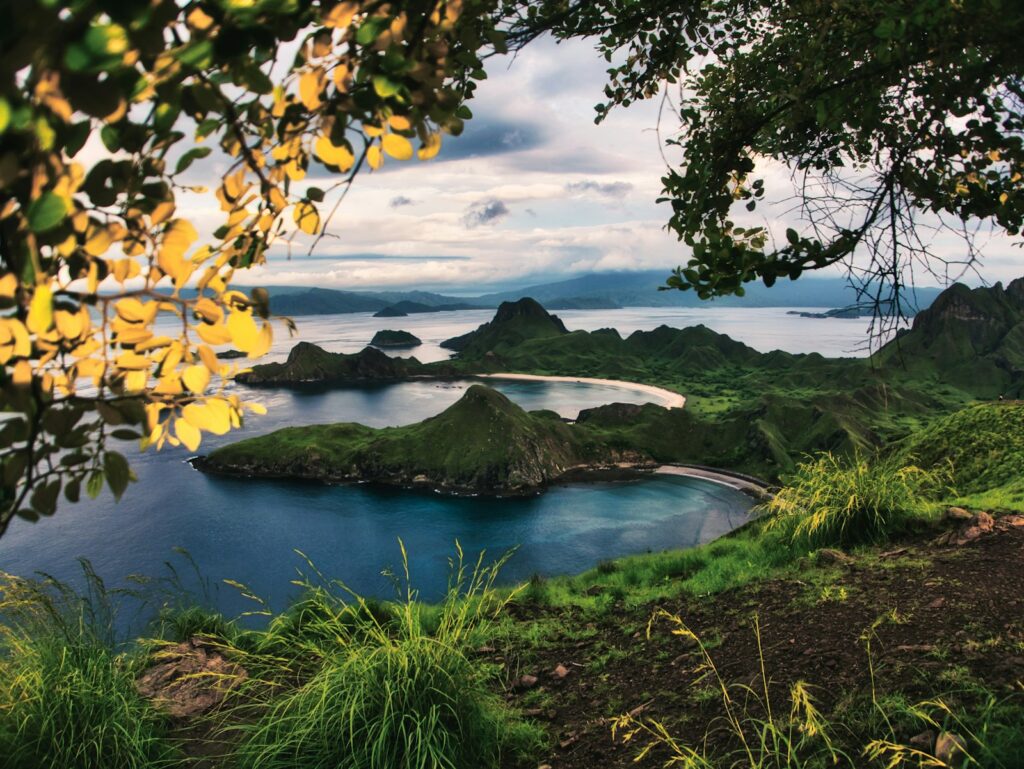
The Komodo National Park daily visitor limit is a park-wide cap of 1,000 visitors per day, announced by Indonesia’s Ministry of Forestry and reported to be fully enforced from approximately April 2026, following a trial period that began around March 2026. If you are planning a day trip to Komodo in 2026 — especially during the June–August peak season — this is the single most consequential policy change you need to understand before you book anything.
This page explains what the cap actually means in practice, how to navigate the new booking system, what is still uncertain, and why arriving in Labuan Bajo without a confirmed reservation is now a genuinely bad idea.
Where the 1,000-Visitor Cap Comes From
Indonesia has been discussing stricter visitor management at Komodo since at least 2019, when the provincial government briefly floated a full island closure that was subsequently cancelled. What emerged instead was a gradual tightening of access: first a controversial conservation membership fee (announced 2022, later officially cancelled and never implemented), and now a concrete daily quota enforced through an online reservation system.
The 1,000/day figure comes from a Ministry of Forestry announcement reported by TTG Asia in February 2026, and has since been corroborated by multiple tour operators based in Labuan Bajo. The park authority, Balai Taman Nasional Komodo (BTNK), operates the SiORA system — Sistem Informasi Online Reservasi Wisata Alam, the national nature-tourism reservation platform — to manage slot allocation under the cap.
Important caveats to carry into your planning:
- The cap was in a trial phase from roughly March 2026 and reported as fully enforced from approximately April 2026. The transition from trial to full enforcement is not documented in a single verified primary-government source available in English — treat the April timeline as the best current reporting, and verify the current status directly with your operator before you travel.
- One secondary source has cited a Padar Island sub-quota of 50 visitors per day. This figure is single-sourced and has not been independently corroborated. We are not treating it as a confirmed fact, but if Padar sub-quotas do exist, they would add a further constraint to popular sunrise slots at the viewpoint.
- Whether truly spontaneous walk-up access is fully eliminated has not been confirmed by a primary BTNK statement. In practice, the shift to advance online booking via SiORA — now mandatory for 2026 — makes walk-up access operationally very difficult even if it were technically permitted.
The SiORA Booking System: What Visitors Actually Experience
SiORA handles slot reservation online before park entry. In practice, most visitors never interact with SiORA directly — their tour operator handles the reservation on their behalf as part of the booking process. This is one reason why the shift to mandatory advance booking has changed the planning calculus so significantly: if your operator cannot secure a slot, you do not enter the park on that date, full stop.
Here is what the system means at the practical level:
- Do I need to use SiORA personally?
- Almost certainly not. Licensed tour operators working out of Labuan Bajo handle SiORA reservations as a standard part of the booking process. When you book a day trip, confirm with your operator that park-entry slots are included in the reservation — not just the boat and guide fee.
- When should I book?
- For June, July, and August travel, operators are recommending booking at least two to three weeks ahead. Some operators report peak-season slots filling quickly. In shoulder months (April–May, September–October), a week’s notice is typically sufficient, but the same principle applies: book before slots go, not after.
- Are park fees still paid in cash on the day?
- Yes. The online reservation secures your entry slot; the actual park ticket and ranger fees are still collected in cash at the park on the day. Budget approximately IDR 300,000–500,000 per person in cash for standard park-fee components (entrance, ranger/guide fee per group, harbour contribution). Fees are set as national non-tax state revenue (PNBP) by BTNK and adjust periodically — confirm the current breakdown with your operator before departure.
- What if a tour operator claims walk-up slots are still available?
- Treat this with scepticism during peak season. Even if a limited number of day-of slots existed at the gate, the cap means those slots are a shrinking and unpredictable resource. The cost of a failed trip — flight to Labuan Bajo, accommodation, boat deposit — is far higher than the cost of booking two weeks earlier.
Why 1,000 Visitors Per Day — and Is It Enough?
Komodo National Park covers approximately 1,817 square kilometres, but the 1,000/day cap applies to the entire park as a single quota. Practically speaking, nearly all day-trippers visit the same four to six sites: Padar Island viewpoint, Pink Beach, Loh Liang (Komodo Island’s main ranger station and trekking hub), Taka Makassar sandbar, Manta Point, and one of the snorkelling bays (Siaba, Kelor, or Kanawa). That concentration means 1,000 visitors does not spread evenly — it stacks at a handful of locations.
The ecological rationale is straightforward. The Komodo dragon (Varanus komodoensis) is sensitive to stress from high human density, particularly on trail approaches. Manta ray cleaning stations at Karang Makassar (Manta Point) are similarly vulnerable to disturbance if too many snorkellers crowd the site simultaneously. Coral at Pink Beach and the snorkelling bays has experienced documented pressure from anchoring and fin contact over years of high-volume tourism.
Whether 1,000 per day is the correct number ecologically is genuinely debated — some conservationists have argued for a lower threshold, while operators note the economic impact on Labuan Bajo’s tourism sector. For the traveller, this debate is largely academic: 1,000/day is the current rule, and planning around it is the practical task.
Peak Season Impact: June, July, and August
June 2026 is peak season — and it is the first full peak season under enforced visitor-cap rules. That combination is genuinely new territory. Here is what the data and operator reports suggest:
Booking Lead Times Are Now Longer
Before the cap, a traveller could arrive in Labuan Bajo and arrange a same-day or next-day speedboat tour without difficulty in most of the year. That model is functionally over for peak months. Operators who previously advised booking five to seven days ahead are now recommending two to three weeks for June–August departures. One Labuan Bajo operator cited peak-season park slots as the binding constraint — not boat availability.
Price Pressure Is Possible but Not Confirmed
When supply is capped and demand stays high or grows, prices tend to rise. Standard shared speedboat day trips were running IDR 1,200,000–1,800,000 per person (approximately USD 75–120) for the 2025–2026 period, with explicit high-season surcharges already typical at the upper end. Whether the visitor cap will push base prices higher in the 2026 peak season is an expectation flagged by multiple operators — it is not a confirmed fact, and it is not a figure we have verified. Treat any peak-season quote with the understanding that the market is tighter than in previous years.
The Spontaneous Trip Is No Longer Viable
This is the clearest practical change. The classic Labuan Bajo experience — wander down to the harbour in the morning, find a boat, negotiate a price, leave at noon — does not work under a quota-managed system with mandatory advance reservation. If your travel style depends on spontaneity, Komodo peak season is now the wrong environment for it. Book in advance, or shift your travel to April–May or September–October when slots are less pressured.
If you want to check availability and secure your slot now, plan your trip via our concierge form or reach us on WhatsApp — our operator partner handles SiORA slot reservation as part of the booking, so you are not system alone.
How the Cap Affects Different Trip Types
Shared Speedboat (Open Trip)
The most common day-trip format — a 20-to-25-passenger speedboat covering the standard six stops in roughly ten hours — is the most directly affected. These boats run on fixed departure slots (typically 06:00–07:00 from Labuan Bajo marina), and each seat consumes one unit of the daily park quota. Operators must align their departure manifest with their SiORA reservation. If they have not pre-registered your name, you are not in the system, and park rangers can refuse entry at the gate.
Private Speedboat Charter
Private charter guests face the same quota constraint but gain scheduling flexibility on every other dimension. A private boat can adjust its route, linger longer at preferred sites, or skip stops entirely. The quota reservation process is the same — your operator books your party into the SiORA system — but with a private charter you are not sharing your boat’s slot with strangers, which simplifies the manifesting. Charter prices start at approximately IDR 8–12 million per boat per day for a small vessel (around six passengers), and scale upward from there.
Phinisi Day Cruise
Luxury phinisi day cruises — typically carrying eight to twelve guests and including meal service, deck lounging, and premium snorkelling kit — operate under the same park-quota rules. The advance reservation expectation is actually well-suited to this segment, since phinisi operators typically require bookings days or weeks ahead anyway for provisioning and crew scheduling.
Multi-Day Liveaboard
Multi-day sailing trips through Komodo operate under a different permit structure (SIMAKSI for extended-stay vessels) and are not simply subject to the 1,000/day entrance quota in the same way as day trips. However, individual site visits — particularly Loh Liang, Loh Buaya, and Padar — may still be subject to daily trekking caps per site. Confirm this directly with your liveaboard operator; the quota management for multi-day vessels is handled differently and the rules are still being operationalised.
What to Verify Before You Travel
The visitor cap is a new and still-evolving policy. Several details remain either single-sourced, officially unconfirmed, or subject to operational adjustment as BTNK refines enforcement. Before you finalise any booking, ask your operator these questions explicitly:
- SiORA slot confirmation: Is my name or booking reference registered in the SiORA system for my travel date? Ask for documentary confirmation if possible.
- Current park fees: What is the current cash amount I should carry for park entrance, ranger fees, and harbour contributions? (Last verified range: IDR 300,000–500,000 per person all-in, but this adjusts.)
- Padar sub-quota: Does Padar Island have a separate daily visitor limit on the day you are travelling? The single report of a 50-visitor Padar sub-quota could not be independently confirmed at the time of writing — ask your operator, who will have the current on-the-ground situation.
- Walk-in status: Are any park-entry slots available for same-day travellers, or is advance reservation the only option on your travel dates?
The nature of a new policy is that its implementation details shift. Operators in direct contact with BTNK rangers will have more current information than any planning guide can provide weeks or months in advance. Use this page to understand the framework; use your operator to confirm the current state.
The Conservation Case for the Cap
It is worth spending a moment on why the cap exists, because understanding it makes the booking process feel less like bureaucratic friction and more like necessary infrastructure. Komodo National Park was added to the UNESCO World Heritage List in 1991. The park supports the world’s largest remaining population of Komodo dragons — approximately 1,700 individuals on Komodo Island alone, with additional populations on Rinca, Gili Motang, and Padar. These animals are not tame. They are the largest living lizard species on Earth, capable of reaching three metres in length and 70 kilograms, and they are genuinely dangerous when stressed or cornered.
High visitor density on the narrow trails at Loh Liang creates exactly the kind of close-proximity, unpredictable human movement that stresses the dragons. Ranger protocols exist precisely because the animals require careful management. A cap that limits the number of groups on trail at any given time reduces the probability of stress-induced encounters and gives rangers the ability to manage spacing between groups effectively.
The marine environment carries similar logic. The manta ray cleaning stations at Manta Point attract these animals because the site provides cleaning services from smaller fish — a behaviour mantas will abandon if the site is too disturbed. Coral reef systems recover slowly, if at all, from sustained physical damage. Managing visitor numbers is not just about the iconic land species; it is about maintaining the park’s entire ecological function.
Visitors who have been to Komodo before the cap, and who found the trails busy and the manta site crowded, are likely to find the experience noticeably better under a 1,000/day ceiling — assuming enforcement holds at stated levels.
Planning Summary: The 1,000/Day Cap in Five Points
- Book ahead, especially in peak season. June, July, and August slots fill faster than in previous years. Two to three weeks advance notice is the current minimum recommendation for peak-season travel.
- Your operator handles SiORA. You do not need to navigate the reservation system yourself, but confirm that your booking includes your name in the system — not just a boat seat.
- Walk-up access is effectively over for peak season. Even if day-of slots technically exist at the gate, do not build a trip around that assumption.
- Park fees are still cash on the day. Budget IDR 300,000–500,000 per person; the SiORA reservation does not cover these fees.
- Verify specifics before you travel. The Padar sub-quota, the precise slot structure, and current park-fee amounts are all operationally live details that your operator can confirm more reliably than any guide written weeks earlier.
Ready to lock in your dates and confirm your park slot? Plan your trip with our concierge, or message us on WhatsApp — we will connect you with a vetted operator who handles advance SiORA registration as part of the booking. No one can pay to change what we publish here; if you proceed through our partner, they may pay us a referral fee at no extra cost to you.
Frequently Asked Questions
What is the daily visitor limit for Komodo National Park in 2026?
The current park-wide cap is 1,000 visitors per day, announced by Indonesia’s Ministry of Forestry and reported as fully enforced from approximately April 2026 following a trial period from around March 2026. This figure is from TTG Asia reporting and multiple operator sources — verify the current enforcement status with your operator before travel, as this is a new and evolving policy.
Can I still do a walk-up day trip to Komodo without booking in advance?
Effectively, no — not during peak season (June–August), and increasingly not in other months either. The mandatory SiORA advance booking system and the 1,000/day cap mean that same-day access is a very limited and unreliable option. Whether any walk-in slots exist at the gate has not been confirmed by a primary BTNK statement, but operators and multiple sources describe the system as advance-reservation-only in practice. Book ahead to avoid a wasted trip.
Does the 1,000 visitor cap apply to Padar Island separately?
One secondary source has cited a Padar sub-quota of 50 visitors per day. This is a single-source figure that we have not been able to independently corroborate. We are not treating it as a confirmed fact. Ask your operator directly about any Padar-specific limits on your travel date — they will have current on-the-ground information from BTNK rangers.
Will the visitor cap make Komodo day trips more expensive in 2026?
A constrained supply and sustained demand create upward price pressure — that much is basic economics, and multiple operators have flagged it as an expectation for peak season. However, this is not a confirmed, quantified price increase. Shared speedboat day-trip prices were running IDR 1,200,000–1,800,000 per person in the 2025–2026 period, with peak-season surcharges already typical at the top of that range. Whether the cap pushes prices beyond the historical peak-season ceiling is something to watch in mid-2026 data. Get quotes from your operator early and compare.
How do I know if my park slot has been booked in the SiORA system?
Ask your operator directly and request written confirmation — a booking reference, a screenshot of the SiORA entry, or an explicit statement that your name is registered for your travel date. A reputable operator will have this information readily available. If they cannot confirm your slot is in the system, treat that as a warning sign and clarify before paying the full tour balance.